
Home » “Their resilience is genuinely inspiring…”
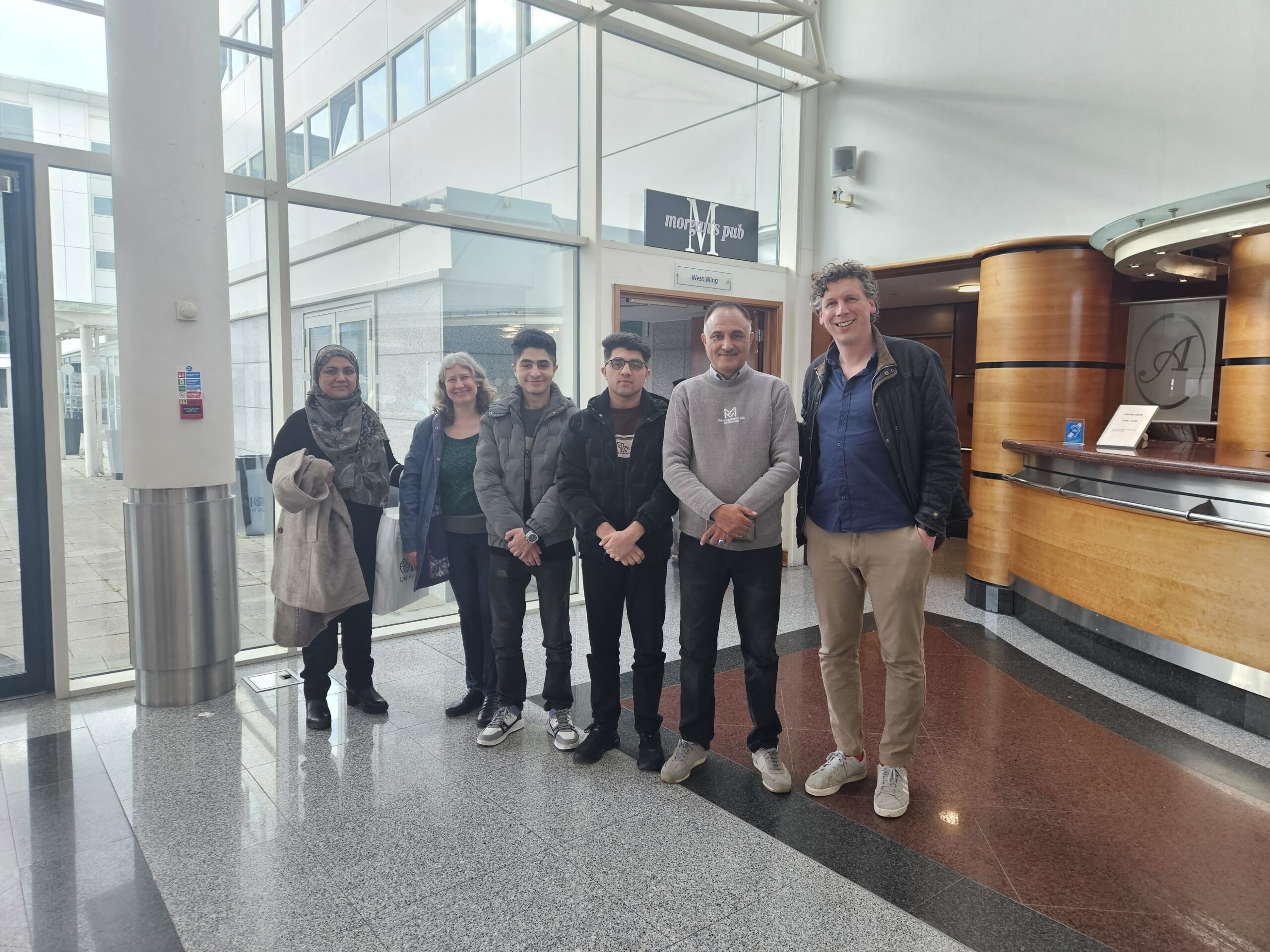
Mark has spent much of his life working alongside people in crisis in various parts of the world. When the opportunity came to welcome a refugee family to Brighton, it felt like a natural next step. What made his Community Sponsorship journey truly unique, however, was that he already knew the family. We spoke with Mark about their story of welcome, what it taught him, and how today’s political climate is affecting families like theirs.
What motivated you to get involved in Community Sponsorship?
My wife and I both worked overseas in humanitarian relief for a number of years — in Uganda, Congo, Afghanistan, Sudan, and other places — so we’ve always been engaged in international relationships, often with people in vulnerable or crisis situations. Even after settling in the UK, we stayed involved in refugee organisations and have often used an annex at our home for asylum seekers or refugees who need a place to stay.
The other piece was our connection to Pickwell, who introduced us to the Community Sponsorship scheme and offered to guide us through it. I’m also part of a church that operates as a charity, and we had a property in Brighton that could be redeployed for something like this. All of those things came together, and we thought — why not?
How did your community respond when you started spreading the word?
Our church community was really the heart of it. We put it to them and said, this is what we’d like to do and if anyone’s interested in being part of the group, come forward. It wasn’t hard at all to pull together 10 or 12 people with different skills who were keen to support it.
Can you tell us about the moment you first met the family you welcomed?
This is where our story is a little unusual. I already knew the family. I had worked closely with the father over 20 years ago in Afghanistan, during my time in humanitarian relief. We’d stayed in some contact over the years, so when the Taliban took Kabul, I knew they were in danger. They received threats and had to leave at very short notice, ending up in Pakistan for several years in that limbo that so many families find themselves in.
Through our connection with Pickwell, we were able to work with the Home Office on what they called “smart matching,” which meant we could specifically sponsor this family we already knew.
The moment I met them again was in a hotel in Crawley. I hadn’t seen them in about 18 years. They’d been through an incredibly long and difficult journey to get to that point, so it was a very special moment.
Was there a moment that stood out when you brought them to their new home?
When we drove them down to Brighton and we took the scenic route over the Downs. It was a lovely day. When we arrived at the house, which had been beautifully set up for them, the mother of the family said: “This is the first time in three years I haven’t felt stressed.” That really said it all.
How are they doing now?
Really well. He’s working, she’s getting qualifications so she can practise her profession here, and the boys are in education. We’re just coming to the end of our two-year support period, but they’re already very independent.
Do you think knowing the family beforehand made a difference to how quickly they settled?
Honestly, I knew this family would thrive here. They already had a lot of the skills and resources they needed, including English. That said, arriving in a completely different country with all its complexities is still a bewildering experience for anyone, and having our group there to help them navigate things and find their feet definitely made a real difference.
What surprised you about the experience?
How complex UK systems are, even for us, trying to understand things like Universal Credit. For example, we didn’t know that the date you first sign on becomes your permanent assessment date. The family arrived and signed on the 26th of the month — and because salaries can be paid on the 25th or the 27th depending on the month, it caused absolute havoc with their benefits for a long time. Literally days of effort went into managing that, and at times they were thousands of pounds behind on payments because of it. You just forget how complicated these systems are for someone with no reference points here.
What have you learned from the family?
Their resilience is genuinely inspiring. They’ve seized every opportunity and very quickly started giving back. They’re connected with their neighbours in a lovely way, and they’d make brilliant Community Sponsors themselves one day. It’s been encouraging to see how quickly they’ve become part of the community.
How did the wider local community respond to the family?
Pretty well, on the whole. We’re fortunate to be in Brighton. Early in their time here, those riots linked to immigration broke out across the country, which was a frightening time for them. There was even a planned far-right demonstration in Brighton. Typical of Brighton, there were about 20 or 30 far-right protesters and around 2,000 counter-protesters. I think moments like that were genuinely reassuring for the family during what was a scary few weeks.
Do you think the family are aware of the current negative rhetoric in the media?
Yes, I think so. But I think they also know how fortunate they are to have arrived when they did and to have been able to establish themselves because that’s becoming increasingly difficult as the climate changes.
What has the experience meant to you personally?
It’s been encouraging to see that there’s so much more to this country’s relationship with immigration than what makes the headlines. There are people in the Home Office thinking creatively about integration, organisations doing brilliant work to support it, and communities stepping up. Being part of that has been a real reminder of that.
What’s a memory that stands out from the two years?
Taking the father and his sons to a Brighton Premier League match. That was really fun. And going to the beach, sharing meals together, all of that.
Do you think they feel at home in the UK?
Yes, I do. I think they felt that from quite early on, which is wonderful.
What would you say to someone considering Community Sponsorship?
We’d definitely encourage it. It’s been a really positive experience for us. Go in with as much knowledge of the benefit system as you can — and maybe don’t sign anyone up on the 26th of the month!
Finally, what do you wish more people understood about refugee resettlement?
First, that immigration and refugee resettlement are two very different things and that resettlement is a very small part of overall immigration. Both bring real benefits. I’d just hope people could approach these issues with less emotion and a bit more context and grounding in the facts.
Share
Give your opinion about our latest poll below or perhaps you’ve a great story we should be covering.
Read all news and insight from our initiatives
See coverage of Reset UK in the press and media
Find out how Community Sponsorship helps refugee families in need build a new life in the UK with confidence and dignity.
Make an extraordinary difference to the lives of people who have lost everything by signing up to our (free) Landlords for Refugees register.
Not everyone can donate their time, so if you are choosing to donate money today instead or as well as, thank you. Your generosity is vital to the work we do support community-led welcome of refugees.
Help others by sharing your account. Why were you attracted to community-led welcome? What worked, what did you learn, what has the experience been like for you?
Reset empowers volunteers to welcome refugees into communities across the UK. Find out about us and the kinds of programmes we’ve been involved with.
Research, monitoring and evaluation are essential for making evidence-based decisions that will support Community Sponsorship to grow and flourish.
Sponsoring a refugee family is a significant responsibility. We advocate for Community Sponsors to ensure that they are properly supported throughout their journey.
Our advocacy focuses on representing the views of Community Sponsors to the Home Office to support them in implementing the necessary operational changes.
We also represent the views of Community Sponsors to other key stakeholders, including Local Authorities, international organisations, the wider resettlement field, housing providers and financial institutions. We also use our voice to campaign on policies affecting refugees. We are members of the Together With Refugees coalition, campaigning for a more humane approach to people seeking protection in the UK.